REVERSE MORTGAGES – CHIP By Home Equity Bank
A Reverse Mortgage can allow you to stay in your home while consolidating debt and supplementing your income.
Reverse Mortgages in Canada: What You Need to Know Before You Decide
Reverse mortgages are becoming a more common conversation in Canada — but they’re also one of the most misunderstood mortgage products available.
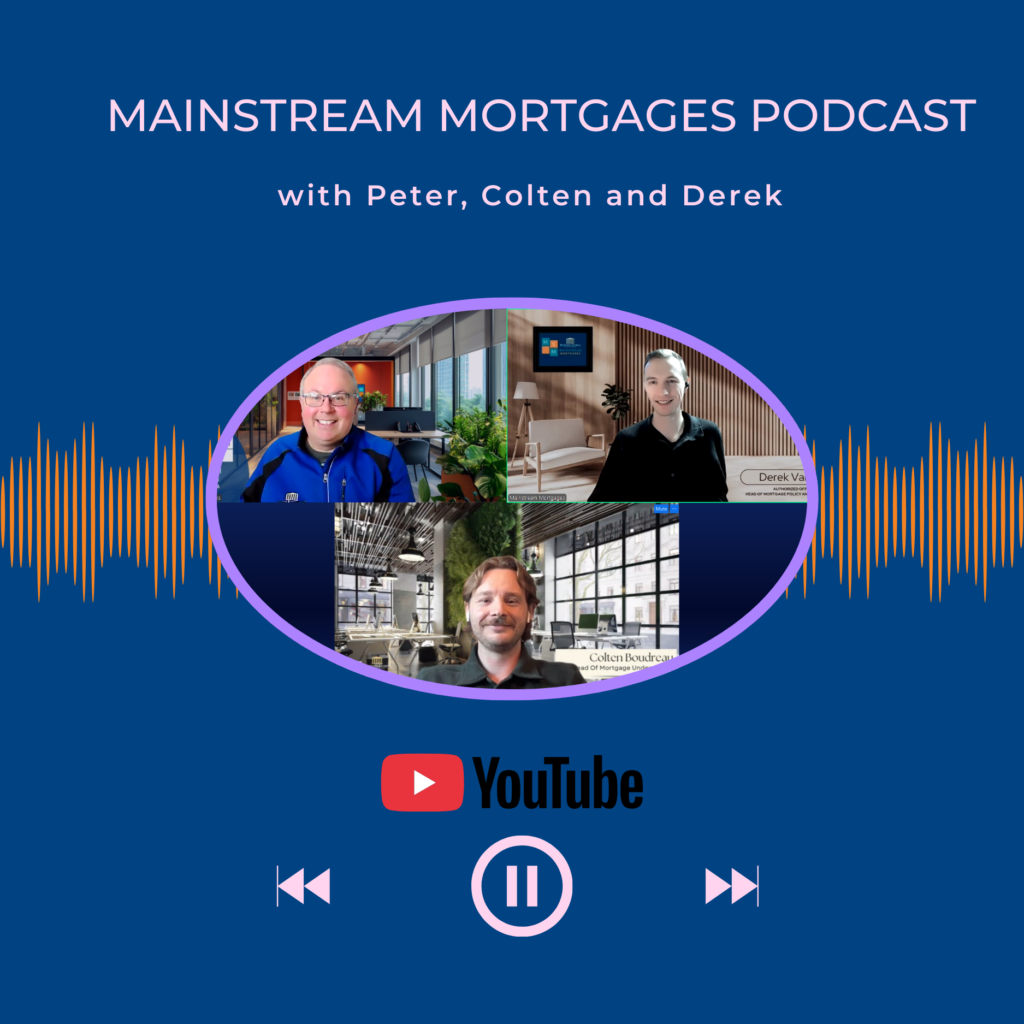
In a recent episode of our Mainstream Mortgages podcast, we sat down with Trevor Gordon to break down how CHIP Reverse Mortgages work, who they’re designed for, and when they actually make sense.
If you’ve ever wondered whether a reverse mortgage could fit into your financial plan (or help a parent or family member), this guide will give you a clear, honest starting point.
What Is a Reverse Mortgage?
A reverse mortgage allows homeowners aged 55+ to access a portion of their home equity without having to sell their home or make regular mortgage payments.
Instead of making payments to a lender, the interest is added to the mortgage balance over time, and the loan is typically repaid when the home is sold.
How Does It Work?
In Canada, CHIP Reverse Mortgages (through HomeEquity Bank) allow homeowners to borrow up to approximately 55% of their home’s value, depending on age, location, and property type.
Here’s the key idea:
- You receive tax-free cash from your home equity
- You continue to own and live in your home
- No regular mortgage payments are required
- The loan is repaid when the home is sold
This structure gives homeowners flexibility — especially in retirement when income may be fixed.
Who Is a Reverse Mortgage Designed For?
Reverse mortgages are not for everyone — but for the right client, they can be a very effective tool.
Typical scenarios where they may make sense include:
- Retirees looking to supplement income
- Homeowners wanting to eliminate monthly mortgage payments
- Clients looking to consolidate debt in retirement
- Individuals wanting to age in place rather than sell
- Families helping parents access equity without forcing a sale
In many cases, the goal isn’t to maximize borrowing — it’s to create cash flow and flexibility.
“Shouldn’t You Just Sell the Home?”
This is one of the most common questions we hear.
And sometimes — yes — selling is the better option.
But for many homeowners, selling means:
- Leaving a familiar home and community
- Downsizing in a market where suitable options may be limited
- Triggering emotional and lifestyle changes they’re not ready for
A reverse mortgage can provide another option: stay in your home while accessing the equity you’ve built over time.
Common Misconceptions About Reverse Mortgages
There’s a lot of outdated or incorrect information out there. Let’s clear up a few key points:
“The bank takes your home.”
No — you remain the owner of your home.
“You can owe more than your home is worth.”
In Canada, reverse mortgages are structured so that you will never owe more than the fair market value of your home at the time of sale (as long as program conditions are met).
“It’s only for people in financial trouble.”
Not at all. Many clients use reverse mortgages as a strategic financial planning tool, not a last resort.
What Are the Downsides?
Like any financial product, there are trade-offs.
Some key considerations include:
- Interest accumulates over time
- Your home equity will decrease
- Rates are typically higher than traditional mortgages
- It may reduce the value of your estate
This is why proper advice and planning are essential — it’s not about “yes or no,” it’s about fit.
The Biggest Mistake We See
The biggest mistake isn’t choosing a reverse mortgage.
It’s not exploring all options first.
Every situation is different, and a reverse mortgage should always be compared against:
- Refinancing (if income qualifies)
- Downsizing
- HELOCs or other lending solutions
- Investment or income strategies
Our role is to walk through these options and help you make an informed decision — not push one solution.
What Does the Future Look Like?
As Canadians live longer and real estate values remain a significant part of net worth, reverse mortgages are becoming a more widely accepted part of retirement planning.
We’re seeing:
- More proactive use (not just reactive)
- Greater awareness and education
- Families being involved in the decision-making process
The conversation is shifting from “last resort” to “strategic option.”
A Helpful Resource: “Home Run – The Reverse Mortgage Advantage”
If you’re looking to go deeper, Home Run – The Reverse Mortgage Advantage by Steven Ranson and Yvonne Ziomecki is a great resource.
The book explores:
- How Canadian retirees are evolving
- The role of home equity in retirement planning
- Common myths and stereotypes
- Real-life client experiences
It’s a helpful way to understand how reverse mortgages can fit into a broader financial picture.
Final Thoughts
A reverse mortgage isn’t right for everyone — but for the right homeowner, it can create meaningful flexibility, reduce financial stress, and allow people to stay in the homes they love.
The key is understanding your options and making a decision that fits your goals.
Have Questions? Let’s Talk
If you’re curious about reverse mortgages — or just want to understand your options — we’re here to help.
No pressure. Just clear, honest guidance.
Peter, Colten & Derek
Mainstream Mortgages
We’d love to be your mortgage brokers.